
A hidden leak under your property quietly drains your wallet. Your main supply pipe carries fresh water from the street meter directly into your home daily. When this crucial pipe breaks, serious structural damage can happen fast. Catching the signs of a broken main water supply line early saves you thousands in restoration costs. Most owners ignore their underground plumbing until a pool of water destroys their basement. Knowing how to detect an underground water leak in your yard prevents total structural failure. Look out for these five common warning signals to protect your house.
Unexplained Jump in Your Monthly Utility Bill
An unexpected charge on your statement signals hidden underground trouble. A sudden high utility bill without extra usage usually means a broken pipe. Even a small hole leaks thousands of gallons each month. First, check that your toilets, outdoor hoses, and faucets are not leaking inside. If your indoor fixtures work fine, water escapes beneath your lawn. Monitoring monthly utility statements helps you spot concealed structural leaks early, and learning how to prevent and fix common plumbing leaks protects your entire home from unexpected water damage.
How to Confirm Hidden Flow With a Meter Test
You can test your system before calling a local plumber. Learning how to check your water meter for leaks gives immediate proof of damage. First, shut off every faucet, shower, and appliance inside your home. Next, open your outdoor meter box and locate the indicator dial. If that dial moves while taps stay off, your Main Water Line is leaking.
Unexplained Puddles and a Soggy Lawn
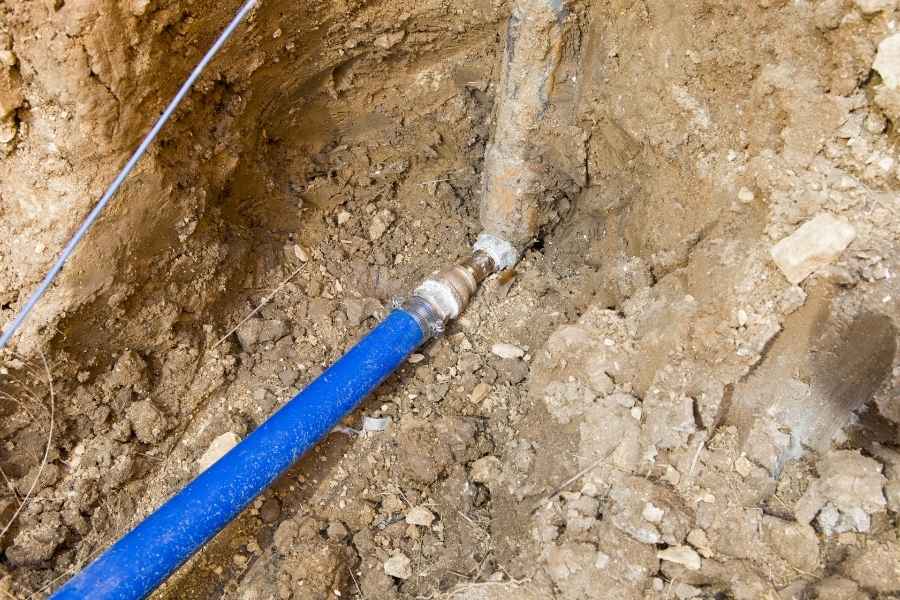
Your front yard should stay dry during warm summer months. A constantly soggy lawn without recent rain reveals a broken underground pipe. Pressurized water pushes upward through thick layers of dirt. This process creates soft mud patches and unusually green grass spots. Stepping onto wet turf when surrounding soil stays dry indicates serious pipe failure. Having essential plumbing tools you should have in your toolbox helps you handle minor shut-offs and basic home maintenance before experts arrive.
Environmental Indicators of Underground Pipe Failure
Soil conditions above broken pipes change rapidly under continuous moisture. Unusually lush grass patches grow along your main supply route. Sinkholes form in your lawn, garden beds, or driveway edges. Soft muddy spaces appear where flowing water washes away loose dirt.
Sudden Water Pressure Drop Across Your Home
Mineral buildup reduces flow slowly over several years. A sudden water pressure drop across all taps points to a broken pipe. Water escapes into surrounding dirt instead of flowing to your sink. When pressure drops everywhere at once, main pipes are broken. Taking a quick shower becomes impossible when leaks bleed off system pressure.
Comparing Main Supply Leaks to Localized Plumbing Issues
Learn how to separate widespread pressure loss from minor faucet leaks. A main line leak causes severe water pressure drop everywhere, while localized leaks affect only one tap. Outdoor symptoms like a soggy lawn point directly to main supply failure. A constant spinning meter while taps stay off confirms subterranean pipe damage.
Foundation Cracks and Structural Warnings
Water leaking near foundation walls washes away surrounding dirt. Soil erosion creates foundation cracks that weaken structural stability over time. Wet dirt builds up heavy pressure against concrete basement walls. Moisture moves through microscopic pores, cracking concrete floors and interior walls. Vertical cracks on basement walls mean your Main Water Line needs immediate repair.
Signs of Sub-Slab Moisture Accumulation
Uncontrolled underground leaks near footings cause visible indoor structural warnings. Fresh vertical or diagonal fractures appear along concrete basement walls. Warped hardwood planks or damp carpets show on slab ground levels. Cracking concrete driveways and shifting walkways form near your entrance.
Persistent Basement Moisture and Damp Odors
Water moving along supply pipes enters low residential spaces. Moisture causes peeling wall paint and standing pools inside finished basements. Constant dampness produces bad odors and mold inside your crawl space. A strong damp smell means water accumulates against exterior walls. Ignoring basement moisture damages floor framing, wall insulation, and air quality.
Frequently Asked Questions
What are the most common causes of a main supply line leak?
Aging galvanized pipes, ground freezing cycles, shifting soil, tree root intrusion, and high water pressure cause leaks.
How much does it cost to repair or replace a leaking main supply line?
Spot repairs cost several hundred dollars, while full replacements range from $1,500 to $5,000 based on excavation depth.
Will homeowners insurance cover main line leak repairs?
Standard insurance covers interior water damage but excludes old exterior pipes unless you purchase extra line coverage.